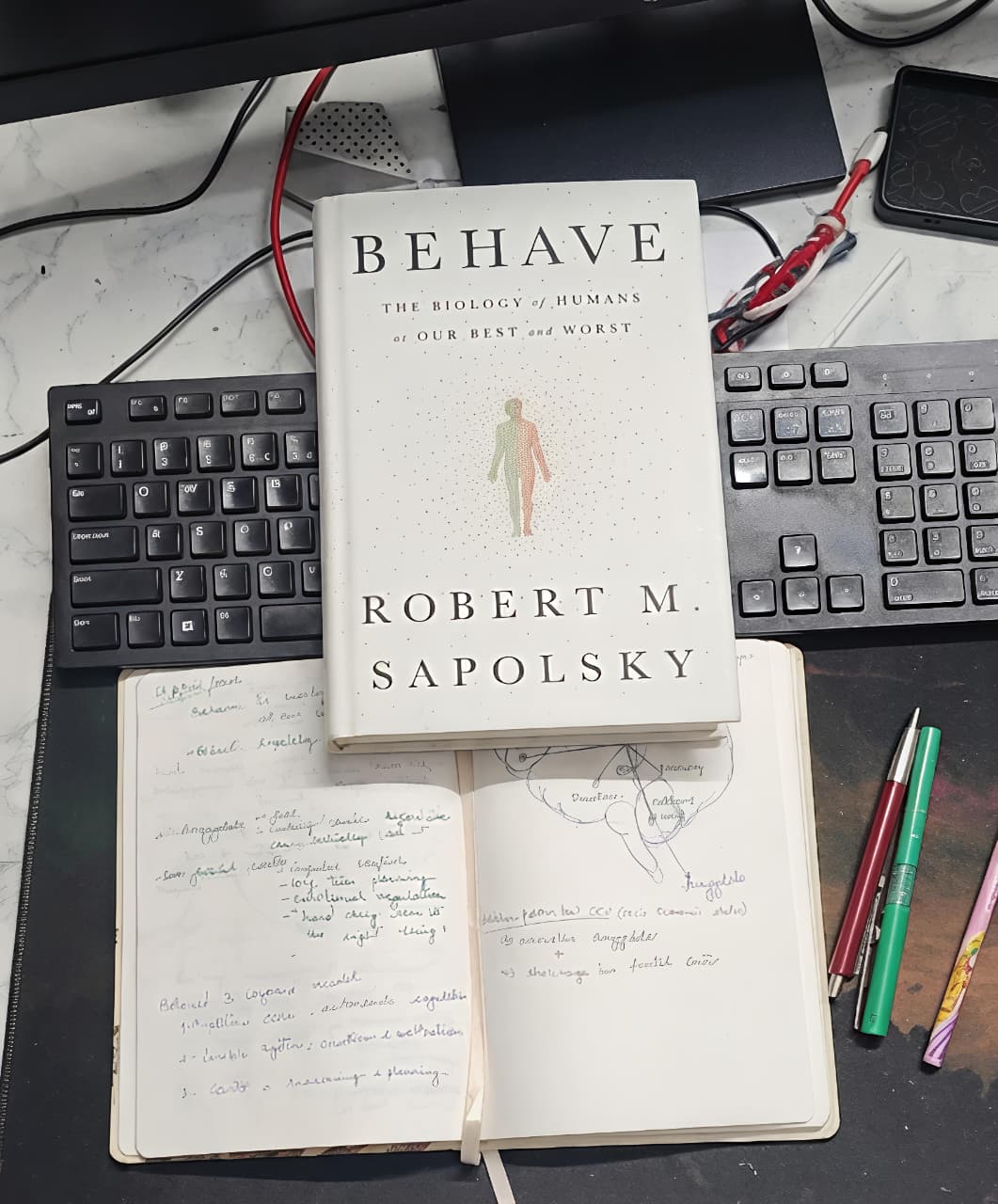
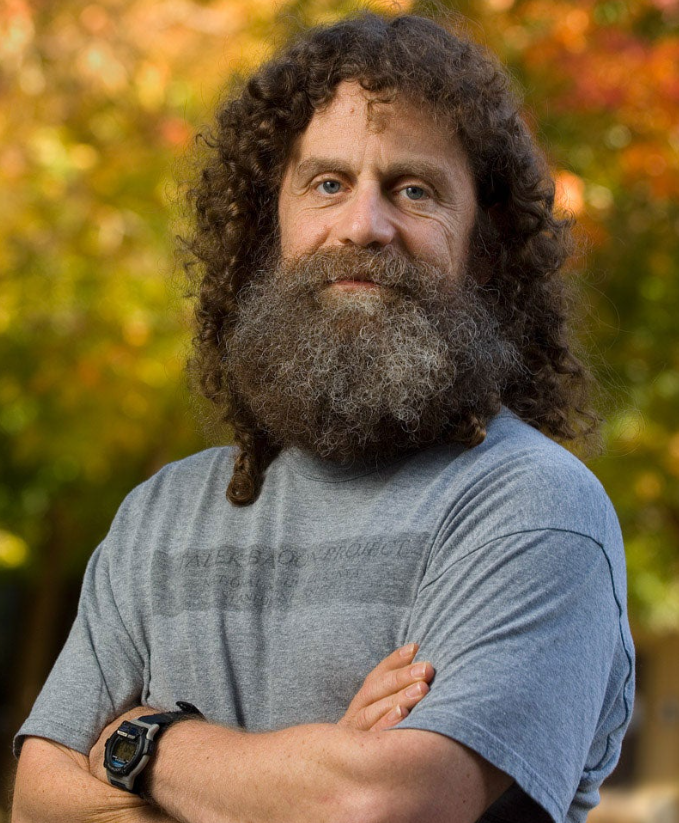
Robert Sapolsky is a neuroendocrinologist and primatologist at Stanford. He’s been studying baboons in Kenya for decades, and that gave him solid results to sprinkle across the book.
Behave: The Biology of Humans at Our Best and Worst is, in the simplest terms, an attempt to answer a single question: Why do we do what we do? Specifically, why do we sometimes harm each other, and why, in those other moments, do we show staggering kindness, courage, and sacrifice? It was first published in 2017.
The book is extremely simple to read, Sapolsky starts by imagining hunting down Hitler and making him suffer in elaborate ways. But then he inspects himself and says that he doesn’t believe in punishment and thinks the word “evil” belongs to musicals. He is, in his words, contradictory, just like most of us.
This contradiction is the book’s engine. We don’t hate violence, we hate violence in the wrong context.
With this, the author hints that the habit of explaining behaviour through a single lens (genes, hormones, culture) is not the ideal approach. Instead, he builds a multi-layered explanation, working backwards in time from the second before a behaviour occurs. Neuroscience, endocrinology, developmental biology, genetics, evolutionary biology, and cultural anthropology will all be in the room simultaneously. He aims to show not just that these factors interact, but that the boundaries between them are largely arbitrary.
It took me three weeks to wrap up the book, and I’ll admit, in between I also listened to some of his podcasts and found his lectures fascinating. So, here is my review or I’d say my notes that I made while reading the book. All the chapters flow seamlessly into one another, often overlapping, which adds depth to the overall narrative. So here we go,
Behavior isn’t a moment, it’s a timeline unfolding backward
In the very first chapter, the author describes how behaviours are not simply actions, rather they are actions in context, as in, whenever a behaviour has happened there exists some events happening in various parts of the brain. Then there are also chemicals operating at the similar region, digestion also plays an equally important role in insinuating the behaviour. He also goes to the extent of involving evolutionary pressures shaping the nervous system over millions of years.
So overall, he introduces us with the backward-in-time framework for the origins of almost all emotional behaviours.
The chapter also provides a roadmap of the brain, the three-layered model from:
- ancient reptilian core (autonomic regulation)
- limbic system (emotion, motivation)
- cortex (reasoning, planning)
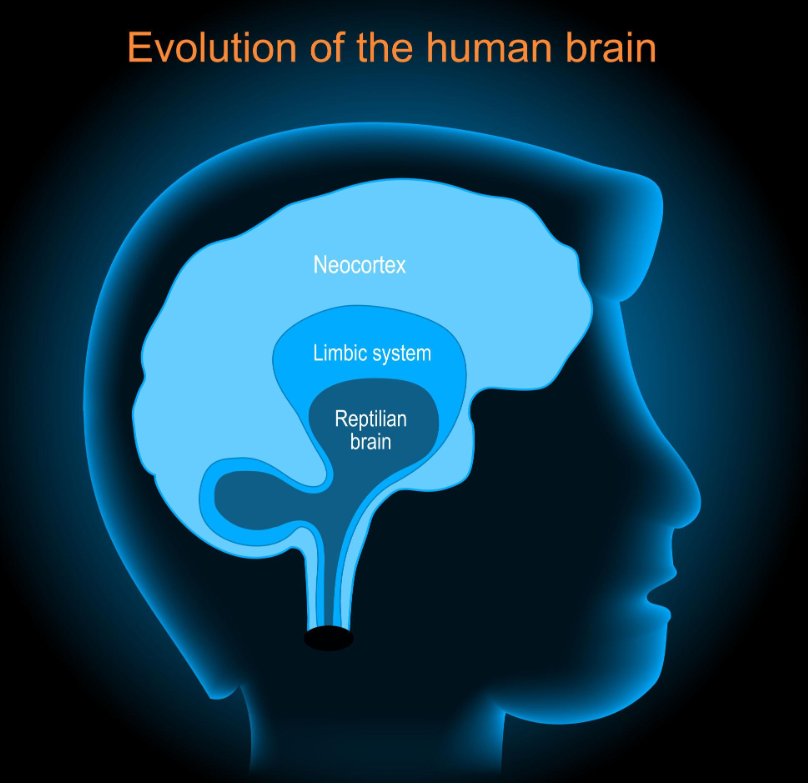
The limbic system and cortex are not opponents, they are deeply entangled, with projections running both directions. The frontal cortex, specifically, is the interface between raw emotion and deliberate thought, and it reappeared on every page of the book.
Another interesting thing Sapolsky talks about is the concept of interoception. As per which, the brain is constantly receiving information from the body’s internal state. For instance, hunger makes people harsher, pain amplifies pre-existing aggression. It is the “ego depletion” phenomenon. After the frontal cortex labours hard on a demanding task, blood glucose drops, and people become less charitable and more impulsive. The frontal cortex is metabolically expensive, and its regulation of behaviour is not unlimited.
So, in the moments just before our most consequential acts, we are less rational and autonomous than we believe. We are being shaped by information we never consciously process.
Hormones don’t dictate behavior, they tune it to the situation
Sapolsky presents an interesting perspective on the “testosterone = aggression” model. He says, Testosterone doesn’t cause aggression, it boosts whatever behavior earns status and that could be dominance, or even generosity, depending on the situation. It rises during challenges, but drives “winning”, not necessarily violence.
Similarly, Oxytocin isn’t just a “love hormone”, it strengthens bonds within your group while increasing distrust of outsiders. Additionally, chronic stress hormones like cortisol can rewire the brain over time, reducing memory and self-control while making you more reactive and fear-driven.
Growing up under pressure wires your brain differently
Your environment doesn’t just influence you, it literally shapes your brain over time.
Growing up in stress (like poverty or instability) keeps your stress system switched on, which makes your brain more reactive (amygdala), and weakens areas for memory and self-control (frontal cortex, hippocampus). This starts early, even before you’re consciously aware of it.
Status matters too. Feeling low-ranking, like you have no control or are constantly under pressure, creates the same chronic stress effects, whether in baboons (he did an experiment) or humans. It’s less about absolute wealth and more about where you stand relative to others.
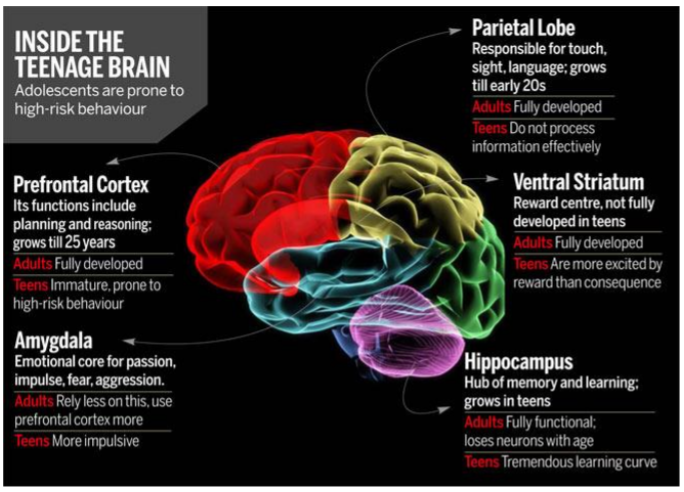
He then talks about the brains of teens. He says teenagers aren’t just “immature”, their brains are literally unfinished. The part that controls judgment and self-control (frontal cortex) is still developing, while the emotional and reward systems are in overdrive. So you get a brain that feels things intensely and chases rewards, but isn’t great at hitting the brakes yet.
That’s why teens are more impulsive, risk-taking, and sensitive to peer approval, it’s not a flaw, it’s how their brain is wired at that stage. Even being watched by friends can push them to take bigger risks, because social approval hits their reward system harder.
So the bottom line is that the teenage brain is built for intensity and learning, not careful decision-making, which is why treating teens like fully responsible adults doesn’t really match the biology.
Early stress doesn’t stay in the past, it lives in the brain
Childhood sticks with you, not just psychologically, but biologically, says Sapolsky.
Early adversity (abuse, neglect, chaos, poverty) builds up, and the more of it you face, the worse the outcomes tend to be later. It wires your brain for threat, that is, stronger fear responses, weaker memory and self-control.
That happens because constant stress during development reshapes key brain areas thus, making you more reactive and less regulated. Parenting and environment matter a lot here. Supportive, stable caregiving can buffer those effects, while harsh or chaotic environments can amplify them. Even bullying can leave deep, lasting marks.
But it’s not destiny. What really matters is the overall load of adversity, and whether there’s at least some stability, support, or safety to offset it.
From genes to culture, behavior is built layer by layer
Another section is very interesting, the whole “nature vs nurture” debate doesn’t really make sense anymore, it’s always both.
Genes don’t act like fixed instructions, they’re more like “if this, then that” switches that depend on the environment. What you experience helps decide which genes turn on or off.
That’s where epigenetics comes in, life experiences can leave chemical marks on your DNA that change how genes behave, sometimes even across generations. And it’s not genes or environment driving outcomes, it’s their interaction. A gene might only matter in a certain kind of upbringing, and vice versa.
So, in a nutshell, behavior comes from a constant back-and-forth between your biology and your environment, unfolding over time.
Additionally, culture isn’t just “around” you, it actually shapes how your brain works. Different cultures train you to see and think differently. For example, some focus more on context and relationships, others on individual things, and that shows up in perception and moral decisions.
Certain cultural setups, like “honor cultures”, make people more sensitive to insults and more likely to respond aggressively, and you can see that in their stress and hormone responses too.
Inequality also gets under the skin. It’s not just being poor, it’s feeling lower in status. That drives distrust, less cooperation, and more aggression. And religion can make people more generous and cooperative, but mostly toward their own group, sometimes increasing hostility toward outsiders. Therefore, culture softly programs how we perceive and react all the way down to biology.
What looks like kindness often has evolutionary logic behind it
Sapolsky says, evolution doesn’t just shape bodies, it shapes behavior too.
Things that look “altruistic” (helping others) often make sense once you factor in kin (help your relatives), reciprocity (help now, get help later), and long-term strategy. Cooperation can actually be the smartest move. A classic example is the Prisoner’s Dilemma, the best strategy isn’t to be selfish, it’s to cooperate, punish betrayal, but also forgive. That’s what keeps cooperation stable over time.
Humans sit somewhere in between different evolutionary patterns, we’re capable of both intense competition and deep cooperation, depending on how things are structured. Even within families, interests don’t fully align and at a bigger level, groups with better cooperation tend to outcompete others.
Thus, a lot of our social behavior like cooperation or conflict has deep evolutionary logic behind it, and it’s more flexible than it might seem.
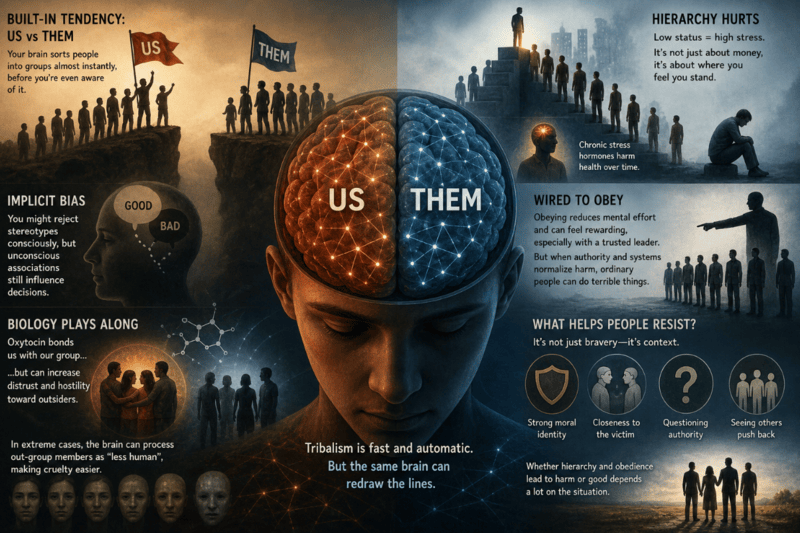
The line between good and harm runs through the situation
Your brain sorts people into “us vs them” almost instantly, before you’re even aware of it. That’s not really prejudice, but it’s a built-in tendency that culture quickly fills in and it takes almost nothing to trigger it. Even random group assignments are enough for people to start favoring their own side and discriminating against others.
That’s where implicit bias comes in, you might consciously reject stereotypes, but still carry unconscious associations that affect real decisions.
Biology plays along too. Oxytocin strengthens bonding within your group, but can also increase hostility toward outsiders. And in extreme cases, the brain can literally process out-group members as “less human”, which makes cruelty easier. The same brain that draws these lines can redraw them, through exposure and shared identities. This also means, tribalism is fast and automatic, but also flexible.
The author further says that being low in a hierarchy isn’t just unpleasant, it’s physically stressful. Feeling lower-status keeps stress hormones high, which harms health over time. It’s not just about money, it’s about where you feel you stand.
At the same time, our brains are wired to follow authority. Obeying actually feels easier as it reduces mental effort and can even feel rewarding, especially when you trust the leader. But the dangerous part is when that tendency to obey meets a system that normalizes harm, ordinary people can do terrible things. It’s less about “bad individuals” and more about the situation they’re in.
What helps people resist isn’t just bravery, it’s context. Having a strong moral identity, being closer to the victim, questioning authority, or seeing others push back all make resistance much more likely. This means, hierarchy and obedience are deeply wired into us but whether they lead to harm or not depends a lot on the situation.
Good intentions aren’t enough, context decides the outcome
We don’t reason our way to moral decisions, we feel them first, then justify them after.
Emotional brain circuits generate that gut sense of “right” or “wrong,” and then the rational part steps in to explain (or sometimes override) it. That’s why two logically identical situations can feel totally different.
There’s also a tension in how we judge things as in, one part of us cares about rules (“don’t do harm”), another cares about outcomes (“minimize total harm”). Good moral judgment usually needs a balance of both. Interestingly, culture shapes what we even consider “moral” in the first place, whether we prioritize fairness, loyalty, authority, or purity.
And context is everything. The same act, like lying, can be seen as either deeply wrong or morally right depending on the situation. Which means, morality isn’t cold logic, it’s emotion first, reasoning second, shaped by culture and context.
Then he talks about Empathy. It isn’t just one thing, it comes in three forms:
- feeling someone’s pain
- understanding it
- wanting to help
That last part, compassion, is what really matters.
But empathy is biased. We feel it more for people like us, and less for strangers, rivals, or large groups. Stress, competition, and “us vs them” thinking can shut it down pretty quickly. Sometimes empathy even fails in groups where responsibility gets diluted. Though in truly urgent situations, crowds can also step up.
A big factor is your body’s state, like, if you’re stressed, you focus on your own discomfort and pull back, and if you’re calm, you’re more likely to care and help. So, empathy is selective and fragile and whether it turns into real help depends a lot on context and your internal state.
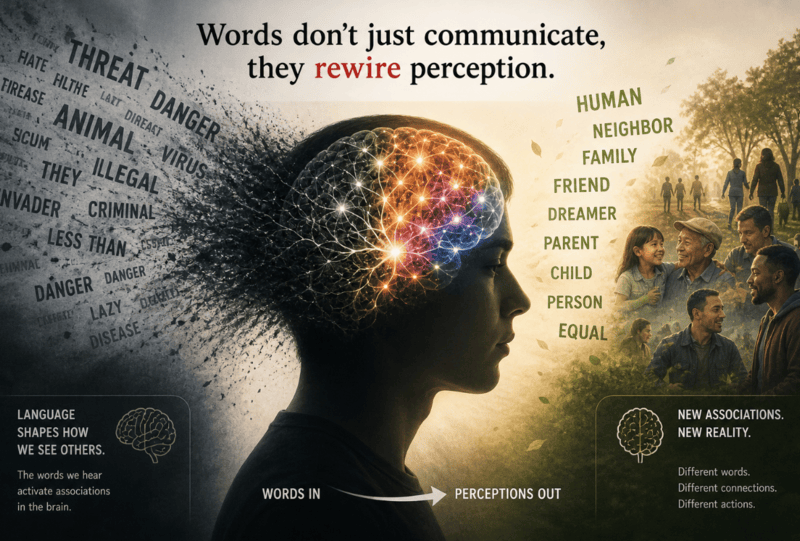
Words shape perception, and perception shapes action
Now there’s this chapter, which is my personal favorite, which says, language isn’t just describing reality, it’s shaping how we experience it.
The metaphors we use (like calling people “animals” or “vermin”) actually trigger brain systems tied to disgust and contamination. That can make others feel less human, lowering the natural resistance to harming them. Even simple framing changes how we think. The same fact, worded differently, can lead to completely different judgments and decisions.
That’s why dehumanizing language shows up so often before atrocities, it shifts how people perceive others at a basic, neural level.
Interestingly, the same tool can be used for good. Humanizing language, personal stories, and shared identities can help people see each other as individuals again. Thus, words don’t just communicate, they rewire perception.
As we learn more about the brain, the idea of “pure free will” gets harder to defend. Behavior comes from layers of biology, such as genes, upbringing, brain development, not some completely independent self.
In extreme cases (like a brain tumor causing harmful urges), it’s obvious responsibility is reduced. But most real cases are complex, people shaped by difficult environments and biology making bad choices.
Sapolsky’s point isn’t “let people off the hook” , society still needs protection. But the idea that punishment is about people deserving suffering starts to look shaky, especially since our urge to punish is itself driven by emotional reward circuits.
So the idea is, we should still restrain dangerous people, but focus on rehabilitation over revenge, and be cautious about irreversible punishments, because our understanding is still incomplete.
The Takeaway
The book gives a wholesome approach towards life in general. Every human behaviour is the result of an extraordinary number of biological factors, operating across timescales from milliseconds to millions of years, and interacting with environmental inputs in non-linear, multiply-determined ways. There is no single cause.
Sure, there are certain ways we’re naturally inclined to think or act, but nothing is ever 100% certain.
The book gives a wholesome approach towards life in general. Every human behaviour is the result of an extraordinary number of biological factors, operating across timescales from milliseconds to millions of years, and interacting with environmental inputs in non-linear, multiply-determined ways. There is no single cause.
Sure, there are certain ways we’re naturally inclined to think or act, but nothing is ever 100% certain.
Personally, I loved it. I’m already really into neurology and how the brain works, so this was exactly my kind of book. That said, I can see how it might not land the same way for everyone,it’s dense, no doubts. I had to take it slowly, really sitting with each section to absorb and make notes to what he was saying. But if you’re willing to put in that effort, it’s incredibly insightful and genuinely rewarding.
And honestly, it’s hard to fully capture in a short review just how impressive the work is. Robert M. Sapolsky does an amazing job weaving together current research and explaining what’s actually being discussed in the field right now. I learned a lot from it, and it definitely left me wanting to explore more of his work.
All things considered, I really do think this is a book everyone should try reading at some point.